Book Launch Checklist: What to Do Before, During & After Release
A five-phase launch timeline — from 8+ weeks out through the first month after release — that keeps your book, retailer setup, and promotion in sync.
A five-phase launch timeline — from 8+ weeks out through the first month after release — that keeps your book, retailer setup, and promotion in sync.
A book launch works best when the book, the retailer setup, and the marketing campaign become ready at roughly the same time. Finishing the manuscript alone does not make a launch ready. The files still need to work, the sales pages need accurate information, reviewers may need advance copies, promotional activities need dates, and readers need somewhere reliable to buy the book when the campaign begins.
A practical launch can be organized into five phases: 8+ weeks before release to establish the launch foundation, 4 to 8 weeks before to prepare readers, reviewers, retailer pages, and assets, 2 to 4 weeks before to lock the campaign schedule, 1 to 2 weeks before to verify rather than reinvent, and launch week and the first month after to execute, monitor, and follow up.
| Launch clock | What it controls | Typical work |
|---|---|---|
| Production Clock | Whether the actual book is ready | Editing, formatting, cover, proofing, final files |
| Retail Clock | Whether readers can find and buy the book | Platform review, metadata, pricing, detail pages |
| Promotion Clock | Whether the intended audience knows about it | ARCs, email, media, ads, promo sites, content |
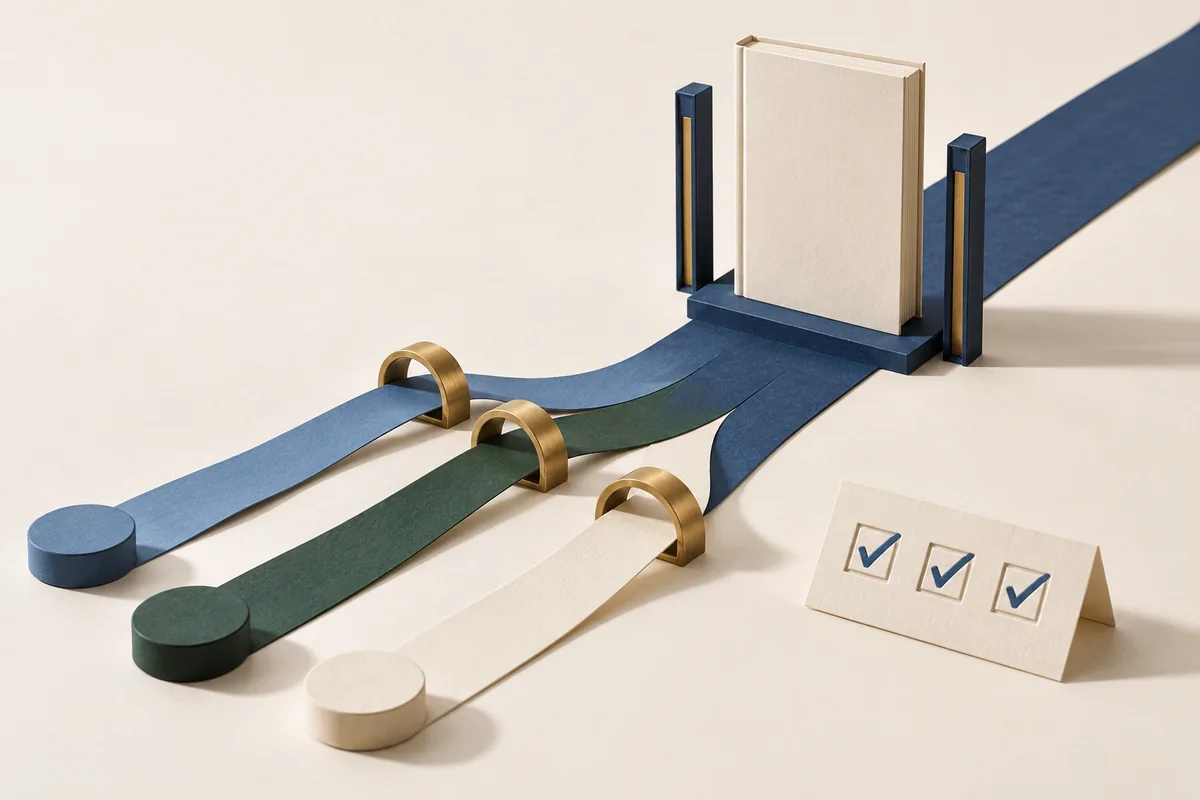
Problems appear when one clock is much further ahead than the others. You might have a beautifully finished book but no retailer page ready for readers. A strong launch brings these workstreams together around the release window.
For Amazon KDP, ebook and print releases currently work differently. For preorders created on or after September 2, 2026, KDP currently allows authors to select a release date up to 18 months ahead, and the product detail page becomes visible during the preorder period. KDP requires the final manuscript to be uploaded and submitted at least 72 hours before the release date. KDP does not currently offer preorders for paperback or hardcover books; eligible new print titles can instead use KDP’s Scheduled Release feature, which currently allows scheduling up to 90 days ahead, but the Amazon detail page remains hidden until the release date, and changes are restricted beginning five days before a scheduled print release.
| Kindle ebook preorder | KDP scheduled print release | |
|---|---|---|
| Readers can order before release | Yes | No |
| Current advance window | Up to 18 months for qualifying new preorders | Up to 90 days |
| Final lock or deadline | Final manuscript at least 72 hours before release | Changes restricted beginning 5 days before release |
Confirm the launch goal: direct sales, Kindle Unlimited page reads, reviews, series read-through, email subscribers, speaking opportunities, or awareness among a specific readership. If it does not already exist, start with our guide to marketing a self-published book. Confirm the target reader, confirm release formats, and decide whether you will use an ebook preorder — a preorder can be useful when there is already an audience to send to the page before release, but simply creating a preorder does not create demand by itself.
Identify outreach with long lead times: reviewers, librarians, booksellers, journalists, podcasters, and influencers may operate on very different schedules, and major media contacts generally need significantly more lead time than consumer reviewers and online creators.
Advance Reader Copies give selected readers early access to the book. A useful ARC workflow runs from identifying appropriate readers, to preparing the ARC, sending clear information, allowing reading time, and following up appropriately. Possible ARC recipients can include genre reviewers, relevant bloggers, Bookstagrammers or BookTok creators, existing readers, and librarians. The list should be built around relevance rather than raw follower count.
Amazon currently allows authors and publishers to provide readers with free or discounted copies. However, you cannot require a review in return or attempt to influence what the recipient says, and additional compensation such as a gift card can invalidate the review. A useful rule for the launch plan: give access to the book, and leave the opinion to the reader.
Prepare the retailer information — title, subtitle, author name, description, categories, keywords, pricing, formats, cover, and author information. If multiple editions will launch together, keep the metadata consistent; Amazon can automatically link editions when metadata matches, but linking may take 48 hours to one week after each edition is live.
Prepare the launch assets you actually expect to use: final cover files, book mockups, short excerpts, author photo and biography, launch graphics, email copy, and retailer links. Prepare the owned audience — if you have an email list, decide what subscribers genuinely need to receive, and continue ARC and reviewer outreach with realistic lead times for each recipient type.
The launch plan should now become specific. Every major activity needs a date, destination, and owner across owned audience, earned reach, retailer/discovery, paid promotion, and assets. If you plan to use Amazon Ads, BookBub, paid newsletter placements, or Meta Ads, check their requirements and lead times before launch week — some placements require applications or approval, some need artwork, and some need a live product page. Detailed costs and budgeting belong in our Book Marketing Cost guide.
The final weeks should focus on catching mistakes and confirming dependencies. Final book check: confirm the manuscript, formatting, cover files, and ebook navigation. Final retailer check: confirm the title, subtitle, author name, description, categories, keywords, price, formats, ISBN, and release date — remember that KDP publication is not always instantaneous, and new detail pages may take up to 72 hours to appear. Final promotion check: confirm email drafts, campaign links, scheduled posts, and advertisements. Click the links yourself and check the mobile experience.
| Workstream | Ready when... |
|---|---|
| Book | Final files are approved and proofed |
| Retailer | Metadata, pricing and available sales pages are correct |
| Audience | Email, website and relevant public destinations are ready |
| ARCs | Appropriate advance readers received copies with sufficient lead time |
| Promotion | Campaign activities have confirmed dates and owners |
| Measurement | Baseline metrics and campaign links are available |
Treat launch as a window rather than a single 24-hour test. During launch week, focus on activating what you already prepared: sending the launch email, publishing scheduled content, activating or adjusting ads, and directing readers to the correct retailer page.
Once the book is live, visit the public retailer page yourself. Check whether the correct cover and price are showing, whether the description is correct, and whether editions are connected where expected. KDP currently estimates that ebook and print editions can take between 48 hours and one week to link after each edition is live.
Follow up appropriately — thank launch partners, follow up with reviewers where appropriate, and send a useful email to subscribers. Fix retailer problems — check whether formats are linked and Read Sample has appeared, which KDP currently estimates may take roughly 7 to 8 business days for ebooks and 9 to 10 business days for print books. Review campaign performance and use the results as evidence for the next decision rather than continuing every launch activity simply because it was part of the original plan.
| Launch marketing | Ongoing marketing |
|---|---|
| Concentrated around publication | Continues throughout the book’s life |
| ARC / reviewer coordination | Organic review growth |
| Release announcements | Regular newsletter communication |
| Launch-week ads | Ongoing or periodic advertising |
After the initial launch period, return to the broader marketing system. Our guide to marketing a self-published book explains how owned, earned, retailer, and paid channels can support the book over time.
You do not need to abandon the launch because you did not begin three months earlier. Prioritize the tasks that affect whether readers can successfully discover, evaluate, and purchase the book: final book quality, accurate retailer setup, correct links, your existing audience, realistic reviewer outreach, and a manageable set of promotional activities. A smaller campaign you can execute well is usually more useful than an elaborate plan assembled in panic.
Not necessarily. Preorders are one launch tool, and they may be particularly useful when readers are already waiting for the book, an existing email audience can be notified, or the title is part of a series. A debut author with no established audience can still use a preorder, but simply making a page available does not create an audience.
A book launch often involves several moving parts at once. The Folio Studios can help coordinate relevant pre-release and post-release marketing work based on the book’s actual needs. Pre-release support may include ARC outreach, audience preparation, cover-reveal support, and launch planning. Post-release support may include review support within platform rules, promotional campaigns, and campaign monitoring. If your book is already produced and you only need launch or marketing support, individual marketing work can also be scoped separately around the project.
Several weeks to several months is common, depending on the campaign. Start earlier when your launch depends on reviewers, media, booksellers, librarians, events, or other people whose schedules you do not control.
No. Amazon allows free or discounted copies, but you cannot require a review or attempt to influence what the reviewer says.
KDP currently allows preorders for eligible new Kindle ebooks. KDP does not offer preorders for paperback or hardcover books.
They can, but they do not have to. Consider retailer readiness, your promotional plan, intended formats, preorder strategy, and whether both versions will genuinely be ready.
Use the relevant audiences and channels you do have, such as professional networks, reader communities, social audiences, partnerships, podcasts, media, paid discovery, or personal contacts. You can begin building an owned email audience for future activity at the same time.
Yes. Authors can hire support for launch planning, ARC outreach, promotional coordination, advertising, and related marketing work. The Folio Studios can scope marketing work independently if you do not need a broader publishing package.
A strong launch comes from coordination. The Production Clock gets the book finished. The Retail Clock makes sure readers can actually find and buy it. The Promotion Clock brings relevant people to the book during the release window. Plan early where outside schedules require it, give reviewers realistic lead time, and keep the launch going beyond one day, then transition the activities that work into your longer-term marketing system.
For the broader strategy, read How to Market a Self-Published Book in 2026. If you want help coordinating your own release, explore our book marketing services or tell us what stage your launch is at.